




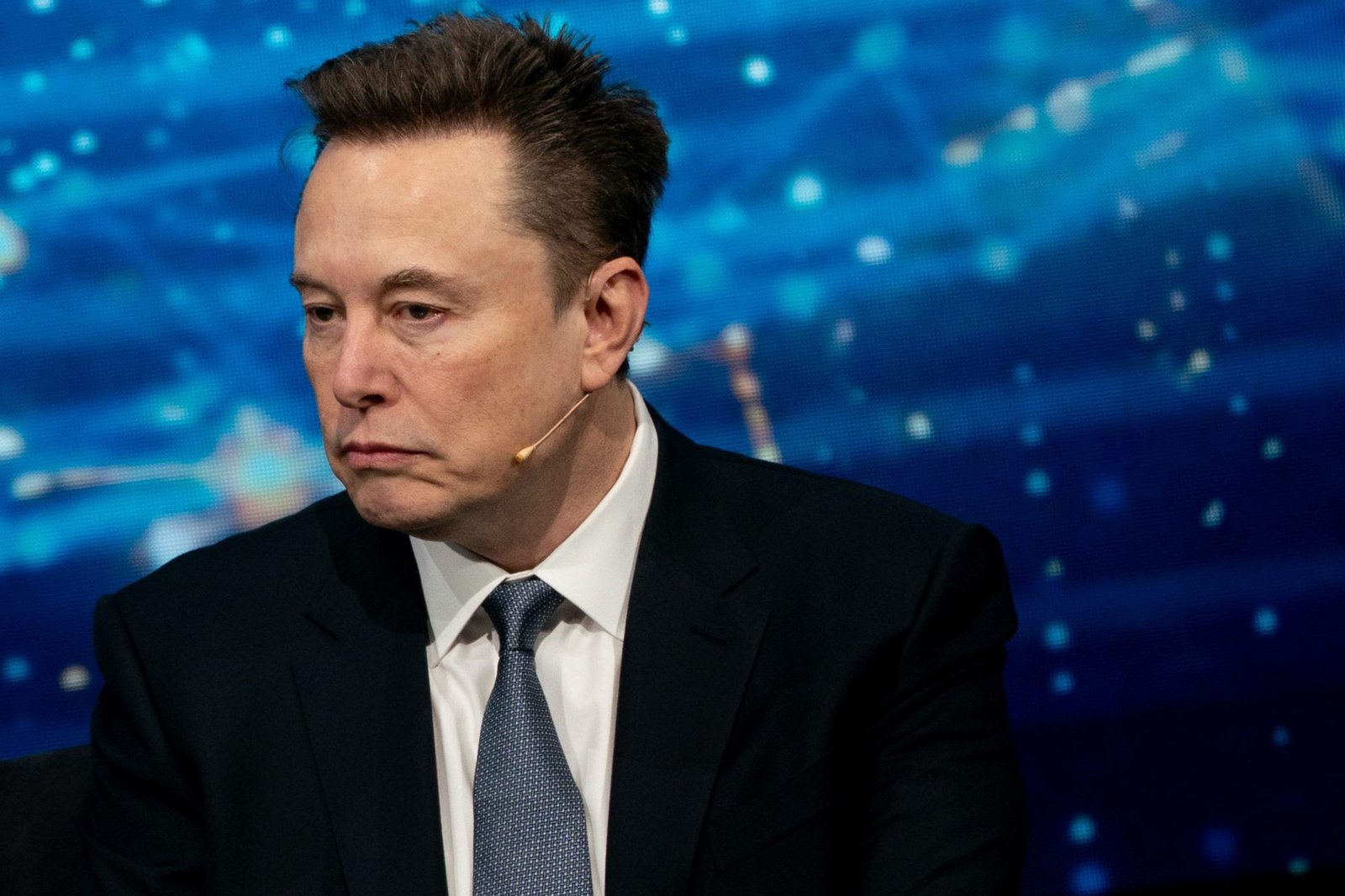
Elon Musk has issued a blunt warning that the United States is on a trajectory toward fiscal collapse unless dramatic productivity gains from artificial intelligence and robotics materialize. He argued that without those technological breakthroughs, the country faces an almost certain financial failure driven by rapidly rising national debt and mounting interest costs.
The Claim and Context
Elon Musk, CEO of Tesla and SpaceX, told interviewers that the U.S. is “1,000% going to go bankrupt” unless AI and robotics deliver transformative increases in output and efficiency. He framed the problem as structural: debt is growing faster than the economy can sustainably service it, and only a step‑change in productivity can close that gap.
Where the Numbers Stand
- National debt: Musk and multiple reporting outlets cite the U.S. national debt at roughly $38.5 trillion, a level that has alarmed investors and policymakers.
- Rising interest burden: Interest payments on that debt are already large—reported to exceed the U.S. military budget—and are projected to climb substantially in the coming decade, increasing fiscal strain.
- Recent fiscal shortfalls: In fiscal year 2026 the federal government reportedly spent hundreds of billions more than it collected, with one widely cited figure putting the shortfall at about $602 billion for that year.
These figures underpin Musk’s argument that conventional fiscal adjustments alone may be insufficient without parallel gains in real economic output.
Why Musk Sees AI and Robotics as the Solution
Musk’s thesis is straightforward: AI and robotics can multiply productive capacity in ways that fiscal policy cannot. By automating labor‑intensive processes, accelerating innovation cycles, and enabling new industries, advanced technologies could raise GDP growth enough to stabilize debt ratios without relying solely on austerity or tax increases. He warns, however, that the transition must be managed carefully because faster production and services growth without commensurate monetary and fiscal adjustments could create new imbalances.
Expert Perspectives and Policy Implications
- Technological optimism vs. practical constraints: Economists acknowledge that productivity gains from technology are a key lever for long‑term fiscal health, but they caution that the scale and timing of such gains are uncertain. Structural reforms, targeted investment in workforce retraining, and regulatory frameworks for AI deployment are necessary complements.
- Monetary and geopolitical buffers: The dollar’s reserve currency status gives the U.S. flexibility to borrow, but experts warn that this is not an indefinite safeguard; declining confidence or higher global interest rates could rapidly raise borrowing costs.
- Distributional and labor market risks: Rapid automation can boost aggregate output while displacing workers in affected sectors. Policymakers must weigh productivity gains against social and political risks and design safety nets and retraining programs accordingly.
What Businesses and Policymakers Should Do
- Prioritize productivity investments. Public and private capital should target AI and robotics projects with clear productivity payoffs in manufacturing, logistics, healthcare, and infrastructure.
- Invest in human capital. Scale workforce retraining and education programs to ensure displaced workers can transition into higher‑value roles created by automation.
- Strengthen fiscal resilience. Combine targeted spending reforms with growth‑oriented investments to reduce long‑term debt vulnerability while preserving social stability.
Elon Musk’s warning is a provocative synthesis of fiscal data and technological optimism: without major productivity breakthroughs from AI and robotics, the U.S. faces acute fiscal stress. Whether one accepts the hyperbolic phrasing, the underlying policy challenge is real—balancing debt sustainability with inclusive, technology‑driven growth will be among the defining economic tasks of the coming decade.
Comments (0)